Diseases and pests
Recognise diseases and pests from photos
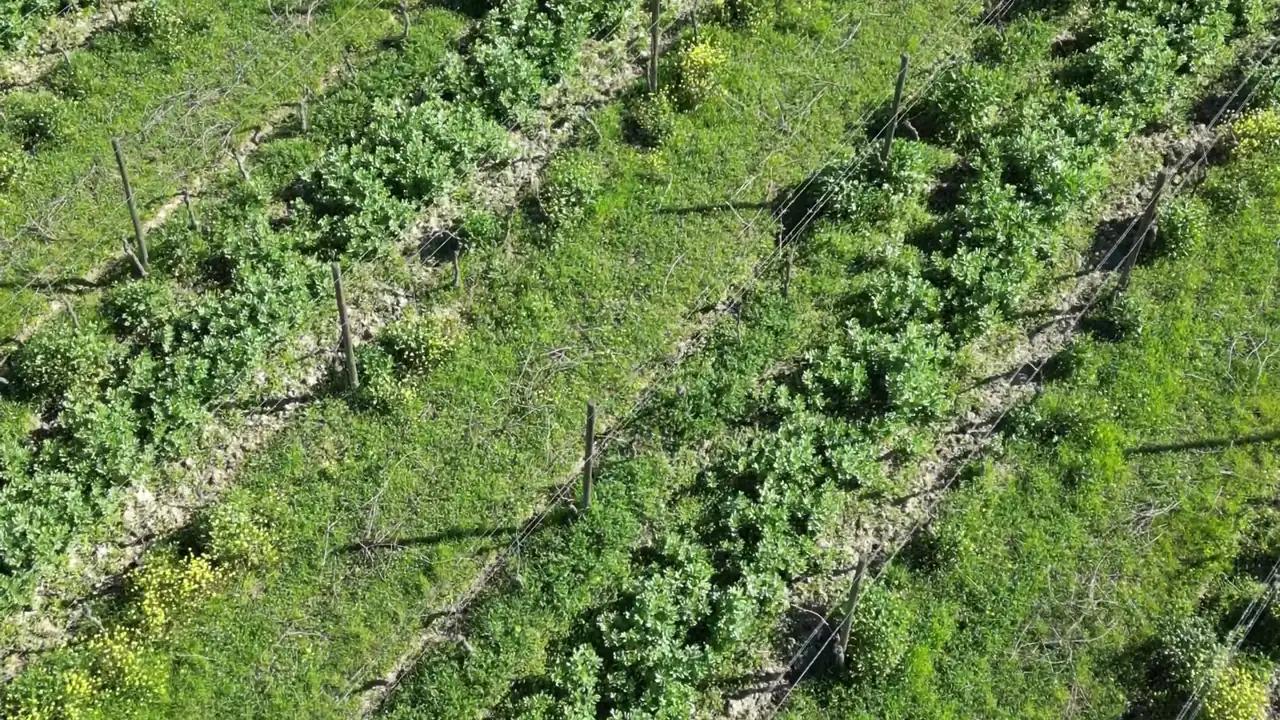
A close-up photo of leaves, fruit or insects, taken with the phone or the drone's zoom, and the crop's model proposes a diagnosis with its probability.
An advisor is not always at your side in the field. AI Observations help put a name to what you see: choose what to look for, upload the photo and the model trained on that crop proposes the most likely diseases or pests. The proposal stays a proposal until a person confirms it, and every observation goes on the field map with its date.
Choose what to look for and upload the photo
Each «What to look for» entry says how the photo should be taken: how close, what must be visible, whether distance is needed. The result shows the most likely diagnoses with their percentage and, next to it, how often the model was right on test photos. Whoever follows the farm confirms, corrects or discards.
- 35 models for crops, diseases and pests
- The diagnosis is always confirmed by a person
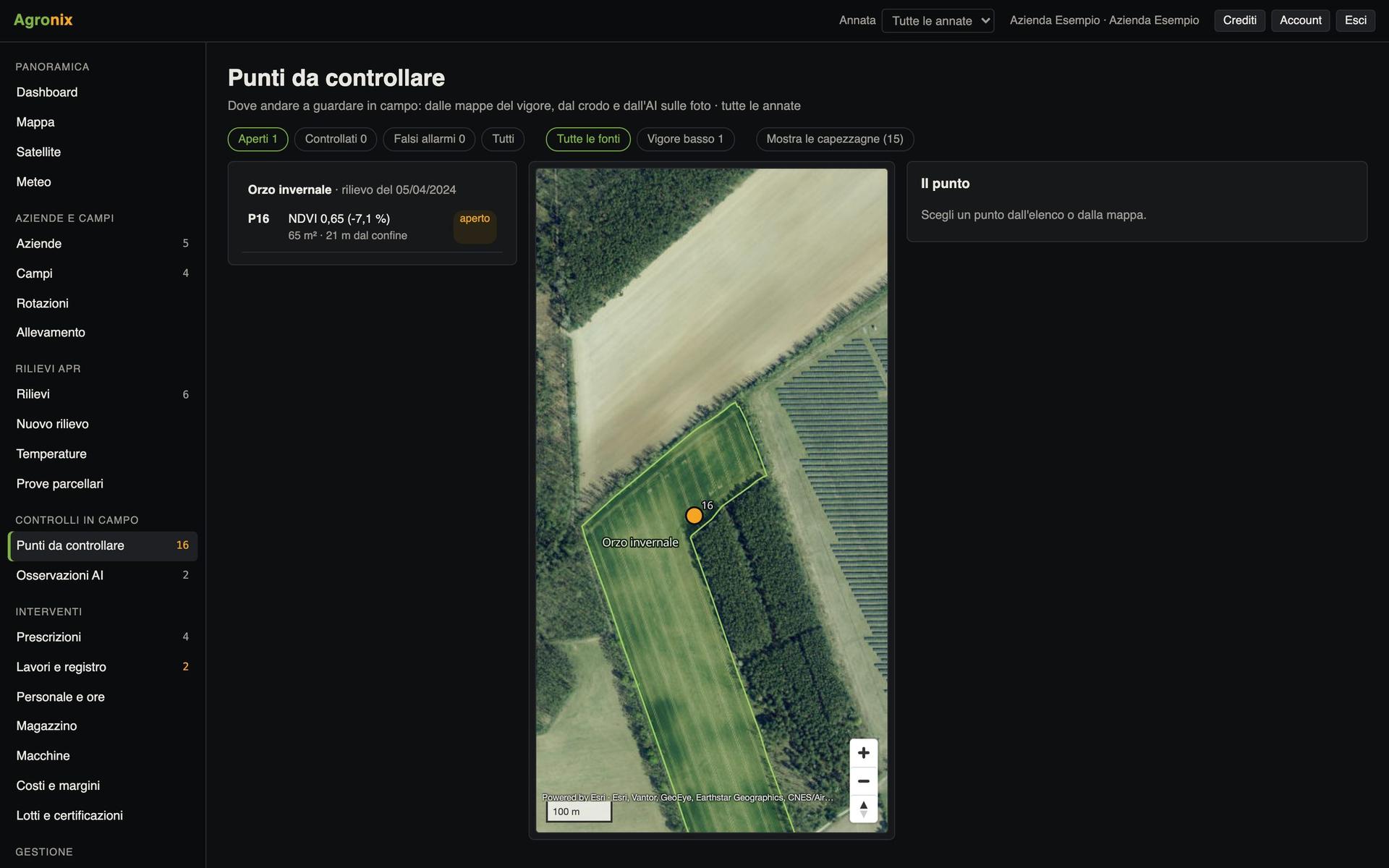
- Every observation on the field map
Italian crops, one by one
Vine, rice, soybean, maize, cereals, tomato, potato, apple, pear, peach, cherry, plum, olive, citrus, fig, walnut, strawberry, leaf and fruit vegetables, legumes, sugar beet, sunflower, onion and garlic. Plus two models valid for all, insects and pests and invasive plants and rice weeds, and the brown marmorated stink bug counted in orchard canopies.
- Models per crop, not one for everything
- Photo instructions for every model
- Measured accuracy shown alongside
Screens with example data.
How it works
- 01
Choose what to look for
The crop and the kind of problem.
- 02
Take the photo
Close-up, in focus, as the model's card says.
- 03
Read the proposal
The most likely diagnoses with their percentage.
- 04
Confirm
The advisor confirms or corrects; the observation stays on the map.
In detail
AI models propose, they do not decide: diagnosis and treatment choice belong to the advisor. Test percentages are measured on archive photos and may be lower in the field.
- Models
- 35 entries in «What to look for», each trained on its crop.
- Photos
- From the phone or the drone's zoom; some models need the distance.
- Where it runs
- On our servers in Europe, one photo at a time.
- Weather risk
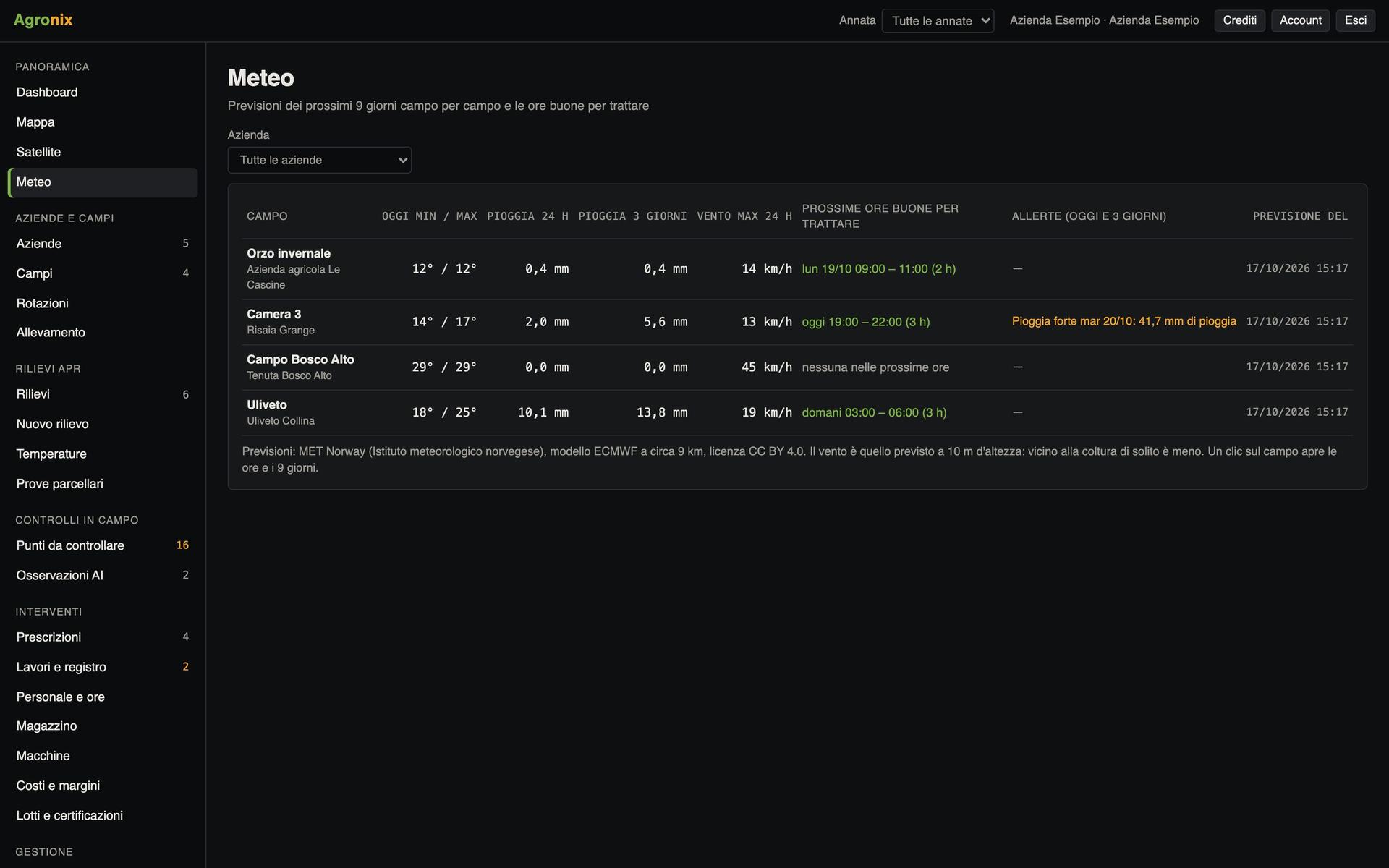
- Vine, apple, potato and tomato also from weather models.
Want to see it on your fields?
An Agronix demo with your farm's data, from survey to records.